

What saturation plug-in do I use most? My honest answer probably isn't what most people want to hear: I prefer analogue saturation, and the McDSP APB is a major part of how I achieve it.
I absolutely love saturation. It is a key part of my mixing process, whether I'm adding weight to a snare drum, bringing out crispness in a hi-hat or giving an entire mix more character.
But after spending years using both software and hardware, I keep coming back to the same conclusion. Saturation is the one area where, to my ears, analogue hardware still has a substantial advantage over plug-ins.
That doesn't mean software saturation is bad. Some of it is excellent. I simply don't think the best plug-ins quite reproduce the depth and character I get from the real analogue circuits.
Watch: What Saturation Plug-in Do I Use Most?
My Go-to: The McDSP APB
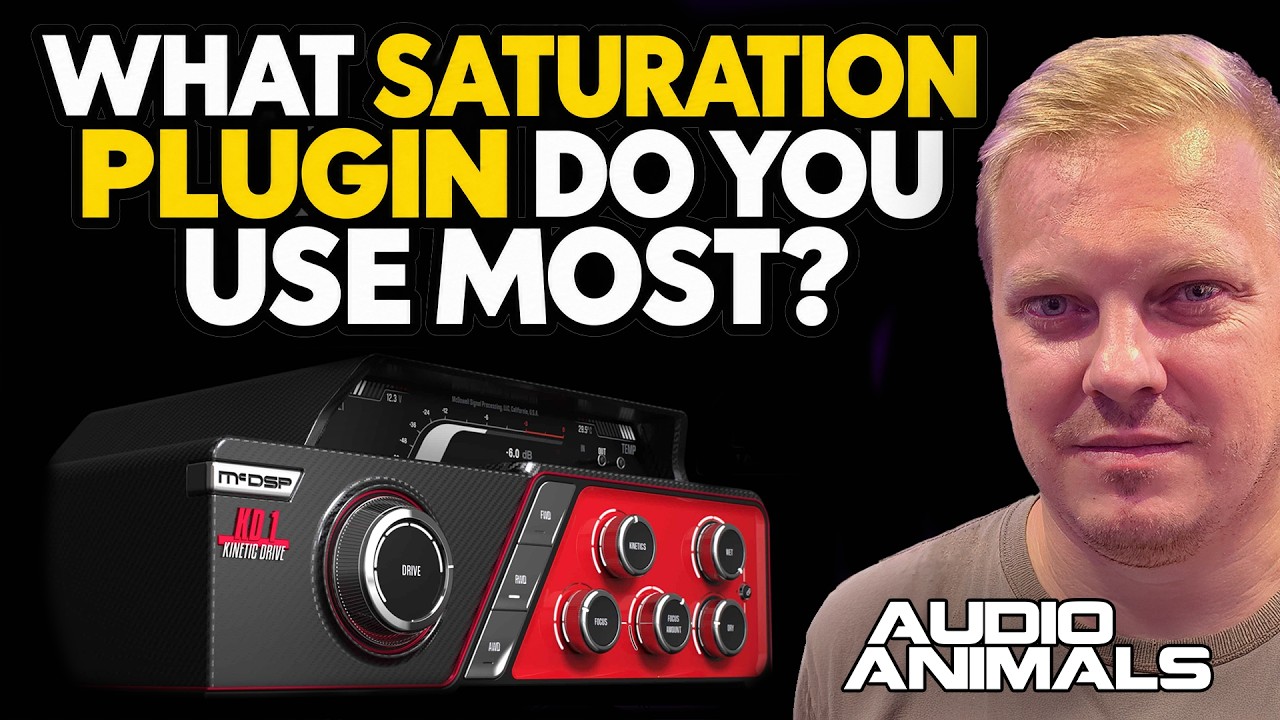
The processor I reach for most is the McDSP APB, particularly the KD1. It looks and operates like a plug-in, but the processing itself happens in the APB's analogue circuitry. The on-screen interface controls the hardware; it is not simply a digital model of it.
With the KD1, I can dial in saturation, adjust focus and shape the overall character of the sound. There is a distinctly analogue quality to what it does, from subtle colour to something much more obviously saturated.
I invested in 80 channels of McDSP APB processing because I wanted that kind of analogue saturation available across a large mixing session. For me, that is a genuinely useful way of bringing analogue processing into a modern workflow.

I Put Saturation On Almost Every Mixing Channel
That doesn't mean I use it on every channel. It means I want the option. Some sounds need very little; others can benefit from more obvious harmonic colour. The key is making the decision based on what the music needs, not automatically adding distortion for the sake of it.
Where I Use Saturation In A Mix
Snare Drums
I love the way saturation can add character and excitement to a snare. It is one of the first places I consider using it.
Hi-hats
Used carefully, saturation can bring out a lovely crispness and presence in the top end.
Across The Mix
I make analogue saturation available on channels throughout a session and engage it wherever the sound benefits.
The APB isn't the only way I work with harmonics. I also like the THD available on WesAudio units and the harmonic possibilities of the Cranborne Audio Carnaby HE2. They are different tools, but they all reflect how important saturation is in my approach to mixing.
Why I Prefer Analogue Saturation Over Plug-ins
I have used plenty of in-the-box saturation plug-ins over the years. FabFilter Saturn 2 was a regular choice, and I also liked Alkane. So this isn't coming from someone who has never tried software saturation.
My issue is that even the plug-ins I enjoy still tend to sound like software saturation to me. They can be warm, rich and useful, but when I compare them with the hardware I own, I hear a difference in depth and the way the saturation develops.
That's a subjective judgement, of course. I'm telling you what I hear in my studio, through my own equipment, and why it influences what I choose to use on clients' records.
Why Saturation Is Harder To Emulate Than EQ
When we're talking about plug-in versions of analogue equipment, I think it is possible to get quite close with certain EQ designs, particularly those with a relatively subtle character. Compressor emulations vary more, although some are very good. The Elysia Alpha compressor plug-in, for example, is a strong emulation of excellent hardware, especially when you consider the price difference.
But when an EQ's appeal comes partly from the saturation of its circuitry, I find the gap becomes more obvious. Take the Hendyamps Michelangelo or the Black Box hardware I use. Their plug-in counterparts can sound very good on their own, but comparing their saturation directly with the hardware is another matter.
I've had the Black Box hardware alongside the software. The plug-in is perfectly usable and can sound excellent. Even so, the hardware gives me something in the saturation that I don't feel the software fully captures.
Which Saturation Plug-ins Would I Consider?
FabFilter Saturn 2
A saturation plug-in that served me well for years. I have used it extensively and still consider it a good option.
Black Box Plug-in
I like the saturation available here. The hardware sounds better to me, but the plug-in itself is genuinely good.
Freak Tube
Another emulation I quite like. Again, I'd choose the hardware when I have the option, but the software has its merits.
I've also heard plenty of people recommend Spectre, although I'm not going to pretend it is something I currently rely on. My advice is to try the options available to you and decide with your own ears. There is nothing wrong with using software saturation if it gives you the sound you're after.
My Honest Answer: I Choose The Analogue Hardware
If you ask me which saturation plug-in I use most, my answer is the McDSP APB KD1 — with an important qualification: the saturation itself is analogue. I use it because I love how it sounds, and because having so many channels available makes it practical across an entire mix. If you're mixing in the box, there are very good plug-ins worth trying. I simply believe analogue hardware still wins when it comes to saturation, based on my own experience using both.
Explore Mixing & Mastering At Audio Animals
Want to hear how we put professional analogue and digital processing to work on real records? Explore our mixing and mastering services, or watch more honest studio discussions on our YouTube channel.

Leave a comment
All comments are moderated before being published.
This site is protected by hCaptcha and the hCaptcha Privacy Policy and Terms of Service apply.