


Audio Animals wasn't built with outside investors, a large financial backing or an established studio handed to us. Nick and I started the business in 2012 with an idea, our experience in audio engineering and a willingness to work incredibly hard to make it succeed.
People sometimes see our studios today and assume we must have started with a lot of money behind us. The reality is very different. We built Audio Animals from the ground up, one client, one improvement and one piece of equipment at a time.
In this article, I want to explain why we took a professional mixing and mastering studio online, how that decision changed everything, and what we've learned about building a business in the music industry.
Watch: The Story of Audio Animals
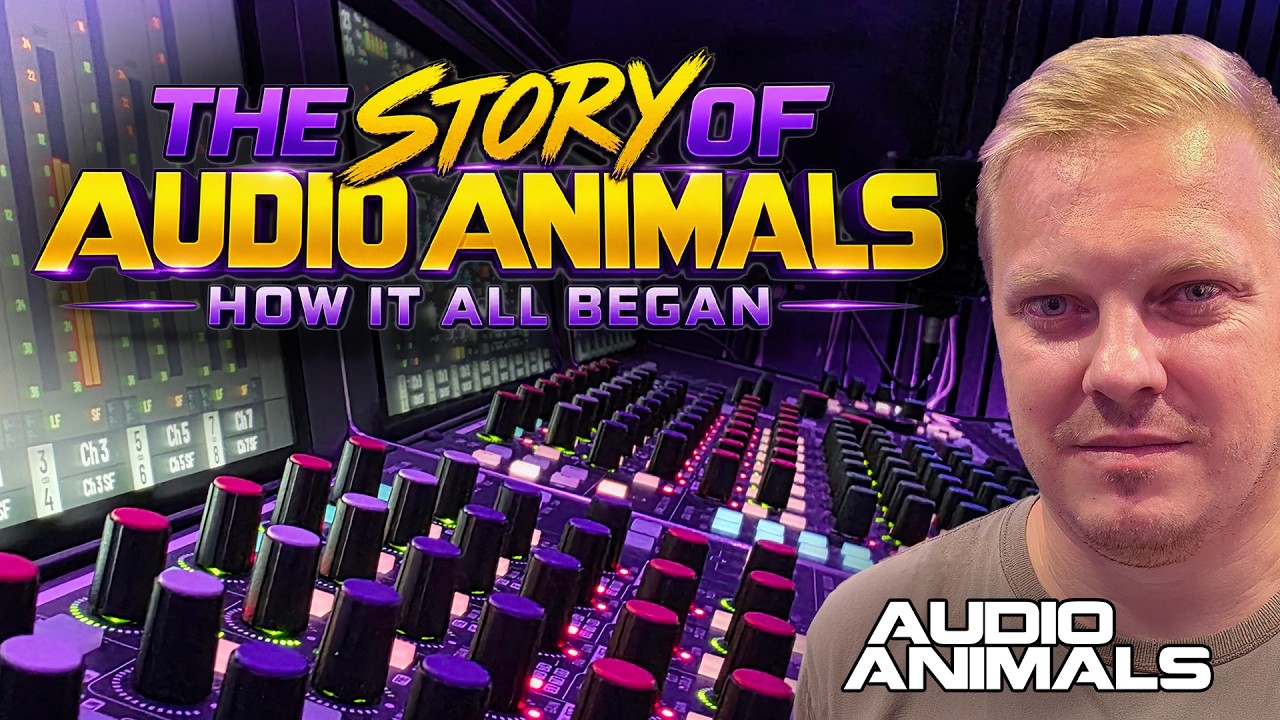
We Didn't Have Investors. We Had an Idea.
I've had people tell me that they could build studios like ours if they had the same investors. My response is always the same: what investors? The only people who invested in Audio Animals were Nick and me. We put in our time, effort and the money we earned along the way.
We didn't begin with a facility full of expensive equipment. Everything you see today has come from years of work, reinvestment, saving and, at times, borrowing money to buy the equipment we needed.
2012: Taking the Recording Studio Online
Before starting Audio Animals, Nick and I had worked in studios and across the music industry. We could see how technology was changing the way people made music, and I believed the business model needed to change with it.
I've always paid attention to how other industries evolve. As more people began shopping for clothes online, I thought about what a similar shift could mean for music production. Recording at home was becoming increasingly practical. People could build their own tracks, develop their own sound and send finished mixes anywhere in the world.
It seemed obvious to me that those musicians would still need professional mixing and mastering. They didn't necessarily need to travel to a commercial studio to get it.
We discussed the idea with people in the industry, and several told us it would never work. They believed clients needed to attend a studio in person. I disagreed. By allowing people to send their music online, we could offer our services internationally rather than only to those able to visit us.
That's the business we set out to build in 2012. It wasn't copied from another company. It was our answer to where we believed music production was heading.

Why Our Online Business Model Worked
Traditional attended studio sessions can involve arranging appointments, managing the client on site, handling payments manually and paying for facilities and staff that aren't essential to every job. For remote mixing and mastering, we saw an opportunity to simplify the process.
Our customers could order through the website, upload their files, let us complete the work and receive their finished audio online. This removed a lot of unnecessary administration and made the service more convenient for everyone.
It also gave us a different way of pricing. Instead of charging every client a large fee that included services they might not need, we could start with an accessible stereo mastering price and let customers select additional services or faster turnaround when required.
For example, somebody wanting a straightforward stereo master could purchase exactly that. Someone needing stem mastering, alternate versions or a quicker turnaround could add those options. The client pays for what they need rather than a bundle of things they don't.
Some established studios struggled to understand how we could offer professional mastering at £50 a track. But they were comparing our streamlined online model with a different way of working. We had deliberately reduced the overheads and passed much of that efficiency on to our clients.
Our idea was simple: make it easy for people anywhere in the world to access professional mixing and mastering, without making them pay for things they don't need.
Order Online
Customers choose their service and place their order without arranging an attended studio session.
Send the Files
Music is supplied digitally, allowing us to work with clients far beyond our local area.
Receive the Master
We complete the engineering and deliver the finished files through an efficient online workflow.
Years of Steady Growth, Then Everything Changed
For roughly our first eight years, Audio Animals grew steadily. We built relationships with clients, developed our website, improved our search visibility and reinvested the money we earned back into the studios.
Then COVID arrived. People could no longer attend many recording studios, and musicians suddenly had time to finish tracks, EPs and albums at home. Because we'd already built an online business, we were in a position to work with them immediately.
Orders increased dramatically. We were working on album after album while other businesses were still trying to establish online systems. We'd spent years developing the exact type of service that became especially useful during that period.
I recognise that the pandemic was devastating for many people and businesses, including parts of the music industry. We were fortunate that our model suited the circumstances. The increased workload allowed us to invest in major studio upgrades, including building two Dolby Atmos rooms.
For me, the lesson is that growth rarely happens overnight. It can look sudden from the outside, but in our case it was built on years of groundwork and preparation.

Why We Kept Investing in Analogue Hardware
We could have built an entirely in-the-box setup and avoided buying so much hardware. But Nick and I made a conscious decision to keep investing in professional consoles, analogue processing and monitoring.
Part of that is simply because we love working with this equipment. More importantly, it enables us to offer clients a studio experience and processing chain they might not have available at home.
I've used the analogy of a driving experience before. If you want to experience driving a Ferrari or Lamborghini, you don't book a day out in the family car you already own. You go because you want access to something different.
It's similar with professional audio equipment. The ability to run a mix through an SSL console and carefully selected analogue hardware is part of the value we offer, alongside our engineering knowledge and experience.
Today our studios have developed into extensively equipped, digitally recallable analogue environments. Both studios now have SSL Oracle consoles, and our setup allows us to revisit work with far greater speed and consistency than a traditional manually recalled analogue workflow.

Running a Studio Means More Than Engineering
Something I regularly tell engineers who want to build a studio business is that doing good work is only part of the job. You also need to make sure people know that your business exists.
That means working on your website, building useful content, improving search visibility, speaking to clients and showing people what you do. For me, producing videos and answering questions online is now a normal part of running Audio Animals.
If someone asks me an interesting question, I could send a private reply. Instead, I'll often record a video. My thinking is that if one person wants to know the answer, others probably do too. It helps people learn, and it creates a stronger relationship between us and the people who follow our work.
I've also worked with other engineers through one-to-one consultancy, sharing what I've learned about developing an online mixing and mastering business. I don't see that as giving away a secret. It's a large worldwide industry, and I'm happy to help other people build something of their own.
My advice is straightforward: don't ignore the business side of being an engineer. You can be excellent at mixing and mastering, but if nobody sees your work, you're making it unnecessarily difficult to find customers.
Audio Animals Today — and What Comes Next
After all these years, we've reached a point where I'm genuinely content with the studios we've built. Both rooms have beautiful equipment, extensive processing options and the facilities we need to work on an enormous variety of projects.
Of course, there will always be another piece of equipment that catches my eye and more ideas we want to explore. But for the first time, I don't feel there's a huge list of things we still need to buy to make the studios complete.
It's easy to look at the finished facility and forget the years of work that went into it. The real story isn't about one console or a room full of expensive gear. It's about starting with a different idea, sticking with it when people doubted us, putting the customer first and continuing to improve year after year.
I don't know exactly what the next chapter will look like. We have ideas, and we'll continue finding new ways to develop Audio Animals. What I do know is that the approach that got us here—working hard, adapting and investing in the business—is the approach we'll keep taking.

My Advice: Build Something You Believe In
Nick and I started Audio Animals without outside investment and without a guarantee that our idea would work. We built a service around the way we believed the music industry was changing, and then put years of effort into making it better.
If you're thinking of starting a business of your own, my advice is to find something you genuinely enjoy, be prepared to work hard and don't expect everything to happen overnight. The process isn't always easy, but seeing what you've built over time is incredibly rewarding.
That's the story of Audio Animals so far. And there's still more to come.